Mt.Kanchanjunga Expedition (8,586m)

Mt.Kanchanjunga Expedition (8,586m)

Mt.Kanchanjunga Expedition (8,586m)
Starting From

Kathmandu

Ending at

Kathmandu

Duration

61 Days

Accommodation

Hotel, Tea House and Tent

Trip Grade

Difficult

Max. Altitude

8,586m

Meal Plan

Break-fast,Lunch and Diner

Group size

2-15 Pax

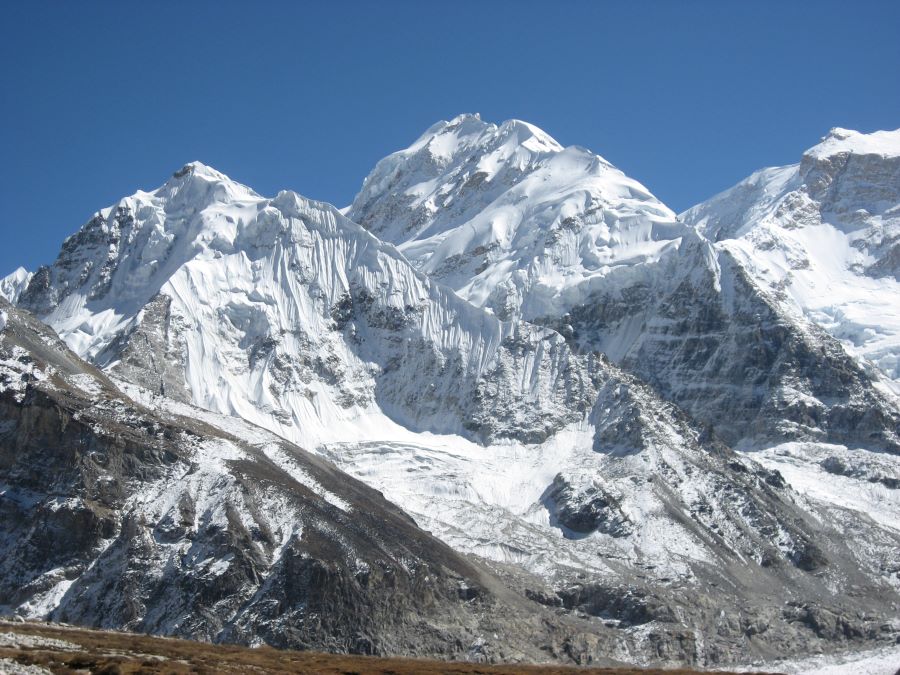
Mt. Kangchenjunga is the third highest mountain of the world, which means “The Five Treasures of Snows”. This mountain contains five peaks of which four of them are over 8,450 meters from the sea-level located at longitude 27º 42′ North and 88º 08′ East in the eastern part of Nepal. The treasures represent the 5 repositories of God i.e. Gold, Silver, Gems, Grain and Holy Books. It is called Sewalungma in the local Limbu language and is considered as sacred in the Kirant religion. Three of the five peaks (main, central and south) are on the border of North Sikkim district of Sikkim, India and Taplejung District of Nepal, while the other two are completely in Taplejung District.

The sanctuary is homeland to the Red Panda and other montane animals, birds and plants. Until 1852, Kangchenjunga was assumed to be the highest mountain in the world, but calculations made by the British Great Trigonometric Survey in 1849 came to the conclusion that Mount Everest (known as Peak XV at the time) was the highest peak of the world. Mt. Kangchenjunga the third-highest peak was first climbed on May 25, 1955 by Joe Brown and George Band of a British expedition. The British expedition honored the beliefs of the Sikkimese, who hold the summit sacred, by stopping a few feet short of the actual summit. Most successful summit parties since then have followed this tradition. The best seasons for climbing is in April, May (pre-monsoon) and September, October (post monsoon).

01

Arrive in Kathmandu

Upon your arrival at Kathmandu airport, one of our representatives will greet you and will transfer you to the hotel. Welcome Evening dinner at authentic Nepalese restaurant with cultural performance. Airport pickup by private Car, Van or Bus (According to group size) Tribhuvan International Airport (KTM), Kathmandu, Bagmati, Nepal.

02

Expedition briefing at Department of Tourism

A formal expedition briefing takes place at Nepal’s Department of Tourism. This crucial session ensures you have the necessary climbing permits, discusses regulations, and provides an opportunity to meet your guides and support team. It’s also when logistical details such as routes, schedules, and safety protocols are reviewed. Meals: Breakfast Accommodation: Night in the hotel

03

Kathmandu - Phedim by bus(1311m)

04

Phedim - Panchami (6h-1600m)

05

Panchami - Doban (6h-1200m)

06

Doban - Khewang (6h-1500m)

07

Khewang - Yamphudin (6h-1670m)

08

Yamphudin - Amje Khola (4m-2500m)

09

Amje Khola - Toronto (6h-3500m)

10

Toronto - Tseram (5h-3770m)

11

Tseram - Ramje (5h-4500m)

12

Ramje - Glacier Camp (5100m).

13

Glacier Camp - Kachenjunga Base Camp (5600m)

14 - 52

Climbing Period of Kanchanjunga Expedition

Climbing Period of Kanchanjunga Expedition

53

Kachenjunga BC - Ramje

54

Ramje - Amje Khola

55

Amje Khola - Yamphudin

56

Yamphudin - Khewang

57

Khewang - Panchami

58

Panchami - Ghopetar

59

Ghopetar - Kathmandu by bus

60

Debriefing at Tourism Industry Division

A debriefing session marks the official conclusion of the expedition. Use the rest of the day to explore Kathmandu’s hidden gems or shop for souvenirs in Thamel or simply unwind before heading home. Meals: Breakfast Accommodation: Night in the Hotel

61

Final Departure

Bid farewell to Nepal, enriched by the incredible memories of your Manaslu Expedition. Ensure you leave with ample time for goodbyes and future plans to return for more adventures! Our representative transfers you to the Kathmandu airport to catch your returning flight back home. Thank you for Travelling with Churen Himal Treks. Airport drop by private Car, Van or Bus (According to group size) Tribhuvan International Airport (KTM), Kathmandu, Bagmati, Nepal. Meals: Breakfast


  • Starting
    Ending
    Min Price
    Status
     
  • 2025-09-19
    2025-11-04
    19200
    Available

The cost includes


  • ARRIVAL AND DEPARTURE : Airport - Hotel transfers – Airport (Pick Up and Drop), by private vehicle.
  • HOTEL ACCOMMODATION IN KATHMANDU : 4-night hotel in Kathmandu (4-star category) - single room on bed with breakfast plan.
  • WELCOME DINNER :One Welcome Dinner in a tourist standard restaurant in Kathmandu with Office Staff.
  • PERMITS :Expedition Royalty and a permit fee from the Nepal Government to climb Mt.Kanchanjunga, Sagarmatha National Park, and Pasang Lhamu Rural Municipality entry permit and fee.
  • LIAISON OFFICER :Government Liaison officer with full equipment, salary, and accommodation.
  • GARBAGE MANAGEMENT :Stool Shipment Transfer & Garbage Deposit Fees.
  • INSURANCE :Medical & Emergency rescue Insurance for all involved Nepalese staff during the trek and expedition.
  • MAP :Trekking and climbing map.
  • DUFFLE BAG :One Churen Duffle Bag.
  • MEMBER TRANSPORTATION :(Domestic Flight) Fly from Kathmandu – to Lukla and while returning Lukla - to Kathmandu, as per itinerary.
  • EXPEDITION STUFFS TRANSPORTATION :All necessary expedition equipment transportation for all Members and Staff from Kathmandu to Lukla (by air cargo) to Base camp (by Porters / Yak) – While returning: Base camp to Lukla (by porters / Yak) and Lukla to Kathmandu (by air cargo). Based on the condition expedition staff may transfer by land (KTM-Phaplu) or Heli (KTM-Lukla).
  • MEMBER LUGGAGE :Up to 50 Kg per member for personal baggage during the trek to be carried by porters or Yaks.
  • FOOD AND LODGING :3 meals a day (breakfast, lunch, and dinner; including tea and coffee) along with accessible accommodation at Hotel/Lodge during the trek and at the Basecamp. Hygienic and fresh green vegetables, fresh meat, fruits, soft drinks, and juice will be served regularly during the entire expedition using helicopter flights. Well-managed base camp set up for members & Staff.
  • PORTER : Porters per member up to the basecamp and from the basecamp (both ways).
  • BASE CAMP STAFF : Experienced and well-trained Base Camp Cook & kitchen Helpers as required.
  • STAFF SALARY AND ALLOWANCE :All Nepalese staff & porter’s daily wages, salary, equipment, food & clothing.
  • BASE CAMP TENT :Each member will have an individual box tent in Base Camp.
  • BASE CAMP EQUIPMENT :Single Tent, foam mattresses and pillow per member, 1 Dinning Tent, 1 Kitchen Tent, 1 Communication tent, 1 Toilet & 1 Shower Tent, 1 Staffs Tent, 1 Tent for Nepalese base camp staff, Store tents, Tables & chairs & all necessary cooking gears.
  • HEATER :Heater at base camp in each Dining and other necessary camps.
  • SOLAR/GENERATOR/LIGHT :1 Solar panel and Generator for lights at base camp, battery charge, for laptop and other electronic devices.
  • TRAINING :Oxygen, Mask Regulator, Ice wall, and Ladder training at Basecamp by UIAGM Gide.
  • HIGH ALTITUDE CLIMBING SHERPA :1 veteran and government-licensed climbing Sherpa per member (1 Member: 1 Sherpa), during the entire climb from Basecamp to the summit and back, and on each rotation.
  • ASSISTANCE :Climbing Sherpa to assist in carrying your gear to the high camps.
  • CLIMBING SHERPA SALARY & ALLOWANCE :Climbing Sherpa Salary, Equipment, Food, and Clothing.
  • BONUS : Carry Bonus of Sherpas and Route Fixing Charges.
  • OXYGEN BOTTLE (O2) :Summit Oxygen cylinder: 5 oxygen bottles (4 ltrs.) for each member and 3 oxygen bottles for each high-altitude Sherpa. **
  • OXYGEN MASK & REGULATOR :1 Set of Summit Oxygen masks & regulators for each member and high-altitude Sherpa. **
  • BACK-UP OXYGEN :BACK-UP Oxygen Cylinder, mask, and regulator (with appropriate charge).
  • HIGH CAMP SERVICE (INFRASTRUCTURE AND LOGISTICS) :High Altitude Tent, Necessary cooking EPI gas, cooking pot, High food for a member, Sherpa, and other crews at (C1) (C2) (C3) and (C4). Group climbing gears, fixed, and dynamic rope during the climbing period as required.
  • HIGH CAMP KITCHEN AND DINING : We will have one cook, kitchen, and dining tents in Camp I and Camp II.
  • HIGH ALTITUDE TENT :Members will share tents in high camps (2 members: 1 tent).
  • ROPE FIXING TEAM :The team of experienced Sherpas will fix the route to the summit of Everest (no extra charge will be applied to members).
  • SATELLITE PHONE :SATELLITE PHONE for emergency communication carried by Sherpa, also available for members with appropriate charge.
  • WALKIE-TALKIE :WalkieTalkie for communicating from Base Camp to Mountain and Mountain to Base Camp.
  • PERMITS :Satellite Phone/walkie-talkie permit for all members and staff.
  • INTERNET SERVICE :Internet facility (1 Mbps) will be available at the Base Camp (subject to a charge).
  • WEATHER FORECAST :Weather forecast report regularly from Meteotest, Bern (Switzerland) during the entire expedition.
  • MEDICAL KIT :Comprehensive Medical kit for members and staff.
  • CERTIFICATE :Everest climbing certificate after climbing Mt. Everest successfully.

The cost excludes


  • AIRFARE : International flight airfare (from and to Kathmandu).
  • NEPAL ENTRY VISA FEE : The Nepalese Visa fee is USD 125 for 90 Days
  • LUNCH & DINNER : Lunch & dinner during the stay in Kathmandu (also in case of early return from Trekking / Expedition than the scheduled itinerary).
  • EXTRA NIGHTS IN KATHMANDU : Extra nights’ accommodation in Kathmandu. In case of early arrival or late departure, early return from Trekking / Expedition, or domestic flight cancellation (due to any other reason) than the scheduled itinerary.
  • INSURANCE POLICY : Insurance covering both medical and high-altitude evacuation costs (for the trip cancellation, interruption, high-altitude rescue & air evacuation, medical treatment, repatriation, etc.) *Mandatory
  • PERSONAL EXPENSES : Telephone Calls, Internet, Toiletries, battery recharge, hot shower, laundry, soft drinks, beers, and any Alcoholic beverages (during the trek and in Kathmandu but we will have soft drinks for members at base camp).
  • PERSONAL CLIMBING EQUIPMENT : Clothing, Packing Items, Bags, Personal Medical Kit, and all kinds of Personal Trekking / Climbing Gear.
  • FILMING : Special Filming, Camera, and Drone permit fee.
  • INTERNET SERVICE : Not included during the trek and the expedition.
  • SUMMIT BONUS : Summit bonus for climbing Sherpa - Minimum 1500 USD.
  • TIPS : Calculate some tips for Basecamp and high camp staff – Minimum 400 USD.
  • EXTRA : Any other services or activities not mentioned in the itinerary and other items not listed in the “Cost Includes” section

Equipment List:

Climbing Gear

  • Helmet: Must be able to fit over your ski hat
  • Alpine Ice Axe: General mountaineering tool (65-70cm)
  • Crampons: 12 points
  • Ascender: 1 right or left-hand ascender
  • A mountaineering harness, with adjustable leg loops
  • Carabiners: 3 lockings and 6 regular*
  • Rappel device: ATC or figure 8*


Clothing

Footwear:

  • Mountaineering boots: suitable for above 8000m; Scarpa phantom 8000 or equivalent (This is because we can work under extreme weather conditions and also preparing you for your ultimate goal to climb Everest)
  • Hiking shoes for the trek to base camp.
  • Booties: Optional, down is best.
  • Bridgedale Summit socks or equivalent: 6 pairs
  • Bridgedale Liner socks or equivalent: 3 pairs


Body Layers:

  • 2 merino base layers: top and bottom
  • 1 mid-layer top: breathable
  • Underwear
  • Lightweight Nylon Pants: 1 pair
  • Soft Shell jacket with hoody: To be worn over other layers
  • Soft Shell Pants: Very breathable and water repellent
  • Hard Shell Jacket with hood: A waterproof and breathable shell jacket
  • Hard Shell Pants: Waterproof and breathable shell pants
  • Insulated Down Jacket with hood: (fill power 800) or equivalent to Rab’s Electron Jacket. We primarily wear this when climbing below Camp 3
  • Insulated synthetic Pants: Worn primarily when climbing below Camp 2
  • Long jones equivalent to Rab’s Polartec or equivalent: 2 pairs
  • Summit Down Suit 


Headgear and Handwear:

  • Warm Hat: Synthetic or wool hat (ski hat)
  • Sunhat: To shade your face/neck from the sun on a hot day
  • Buff: To protect your neck/face from the sun
  • Glacier glasses: Full protection with side covers or wrap around
  • Ski goggles: To be worn on summit day in the event of high winds
  • Lightweight synthetic liner gloves: For wearing on a hot day; 2 pairs
  • Softshell gloves: To wear for moderate cold/wind
  • Shell glove with insulated liner: To wear for severe cold / strong wind
  • Expedition Mitts


 Personal Gear:

  • Expedition Backpack: 65L pack should be large enough.
  • Trekking Backpack: To carry on the trek to base camp. Simple and light.
  • Sleeping Bag (for high camps): Rated to at least -40°F. Goose down or synthetic.
  • Sleeping Bag (for base camp): rated to at least -20°F
  • Compression stuff sacks: 3 large ones; for reducing the volume of the sleeping bag, down parka, etc., in your pack
  • High-Quality sleeping pad (1 for base camp and 1 for high camps): Full length is preferred
  • Closed-cell foam pad: To be used in conjunction with the inflating pad for warmth and comfort when sleeping
  • Trekking poles with snow baskets: Adjustable poles
  • Cup: Plastic insulated cup for drinking
  • Bowl: A plastic bowl for eating dinner or breakfast
  • Spoon: Plastic spoon
  • Head torch: 1 normal for base camp and 1 with remote battery systems for climbing at night. This will be used whilst climbing at night
  • Sunscreen: SPF 50 or above
  • Lip balm with sunblock
  • Water bottles: 2 wide mouth bottles with a 1-litre capacity
  • Water bottle parkas (2): fully insulated with zip opening
  • Thermos: 1 litre (buy a good one to keep your water warm for longer hours)
  • Pee bottle: 1-litre minimum bottle for convenience at night in the tent
  • Toiletry bag: Include toilet paper and hand sanitizer and a small towel
  • Hand warmers & toe warmers
  • Penknife or multi-tool (optional)
  • Camera: bring extra batteries and memory cards.
  • Personal solar charging system (optional but recommended)
  • Travel Clothes: For days in-country
  • Duffel bags (2) with locks: To transport equipment
  • Base Camp Items: Kindle, I pad, smartphone, etc
  • Snack food: Please bring a few days of your favourite climbing snack food such as bars, gels, nuts, beef jerky, etc. A variety of salty and sweet is good
  • Small personal first aid kit: Include athletic tape, Band-Aid’s, Ibuprofen, blister care***, personal medications, etc
  • Medications and Prescriptions: Bring antibiotics (Azithromycin, etc.), and altitude medicine such as Diamox and dexamethasone

Frequently Asked Questions (FAQ)


Click to ask        

Comments

Aline

Aline de France écrit sur 08-04-2021

Agence très sérieuse, professionnelle toujours à l’écoute de nos attentes et de nos envies.Capable de nous proposer des treks à la demande et personnalisés.Cela fait maintenant la 13ème année que nous partons avec Churen Himal Treks.

Write a review

Captcha Image

Need help?

If you need help booking a trip or need more information, please do not hesitate to speak with our representative. You can make a direct call or use any messaging service, for example. WhatsApp, Viber, Telegram or Signal.

+977 9860204721

We are affiliated with

Professional Affiliations.
We are registered, affiliated and recognized by the following institutions.
  • Alpinist Club
  • Community Si logo