Why Choose the Annapurna Base Camp Trek via Poon Hill?
There are many trekking routes in Nepal, so why does the Annapurna Base Camp Trek via Poon Hill consistently rank among the top treks in the world? The answer lies in its diversity. This route gives you the best of everything Nepal offers — from subtropical forests to alpine glaciers, from charming hill villages to towering Himalayan giants.
Starting with the famous Poon Hill sunrise (3,210m), trekkers witness one of the most stunning panoramic views in the Himalayas. Imagine standing above the clouds as the golden sun touches the peaks of the Annapurna and Dhaulagiri ranges. It’s the kind of moment that stays with you for life.
Unlike direct ABC routes, the Poon Hill variation provides gradual altitude gain, making it ideal for better acclimatization. This significantly reduces the risk of altitude sickness and increases your chances of comfortably reaching Annapurna Base Camp.
Here’s what makes this route unique:
-
Iconic Poon Hill sunrise viewpoint
-
Rich Gurung and Magar culture
-
Natural hot springs at Jhinu Danda
-
Diverse landscapes within a short distance
-
Moderate difficulty suitable for most trekkers
In just 15 days, you experience an incredible change in scenery — from lush green hills to icy glaciers. That’s rare in any trekking destination worldwide.
Annapurna Base Camp Trek 15 Days – Overview
The Annapurna Base Camp Trek – 15 Days via Poon Hill is designed to provide a comfortable pace with proper acclimatization. Starting in Kathmandu, the journey continues to Pokhara — the beautiful lake city of Nepal — before heading into the Annapurna Conservation Area.
The trek gradually ascends through:
You’ll walk approximately 5–7 hours per day, depending on terrain and altitude. The maximum elevation is 4,130 meters at Annapurna Base Camp.
Major Highlights of the Trek
The Annapurna Base Camp Trek is packed with unforgettable highlights that keep trekkers talking about it long after they return home.
1. Spectacular Mountain Views
You’ll see Annapurna I (8,091m), the 10th highest mountain in the world, along with Machhapuchhre, Annapurna South, Hiunchuli, and Gangapurna.
2. Poon Hill Sunrise
One of the best panoramic viewpoints in Nepal.
3. Annapurna Sanctuary
A natural amphitheater surrounded by towering Himalayan peaks.
4. Cultural Encounters
Experience traditional Gurung and Magar hospitality.
5. Natural Hot Springs
Relax at Jhinu Danda after days of trekking.
Each day brings something new — whether it’s crossing suspension bridges, walking through rhododendron forests, or sharing tea with locals in mountain villages.
Detailed 15-Day Annapurna Base Camp Trek Itinerary
Day 1–2: Arrival in Kathmandu and Drive to Pokhara
Your journey begins in Kathmandu with a cultural introduction and trek briefing. The next day, you drive or fly to Pokhara — a scenic lakeside city with stunning views of Machhapuchhre.
Pokhara acts as the gateway to the Annapurna region.
Day 3–5: Trek to Ulleri, Ghorepani & Poon Hill
The trek officially starts from Nayapul. Walking through terraced fields and stone steps, you reach Ulleri. The climb to Ghorepani is challenging but rewarding.
The early morning hike to Poon Hill for sunrise is pure magic.
Day 6–10: Tadapani to Annapurna Base Camp
Descending through forests and ascending along the Modi Khola river, you reach Chhomrong, then Dovan and Deurali. The landscape becomes more alpine.
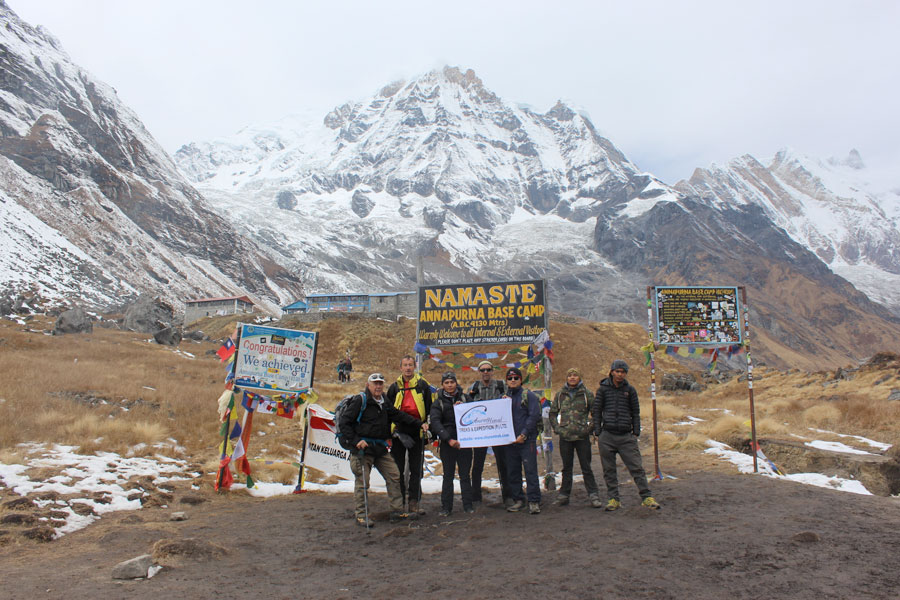
Finally, you reach Annapurna Base Camp (4,130m) — surrounded 360° by Himalayan peaks.
Day 11–15: Return via Bamboo & Jhinu Danda
Descending feels easier. A relaxing bath in Jhinu’s natural hot springs rejuvenates your body before returning to Pokhara and Kathmandu.
Poon Hill Sunrise – A Magical Himalayan Experience
If there’s one moment during the Annapurna Base Camp Trek that feels almost surreal, it’s the sunrise from Poon Hill. You wake up before dawn, wrap yourself in layers to fight the mountain chill, and slowly hike uphill with a headlamp lighting the stone steps. The sky is still dark. The mountains are only shadows. But then something incredible happens.
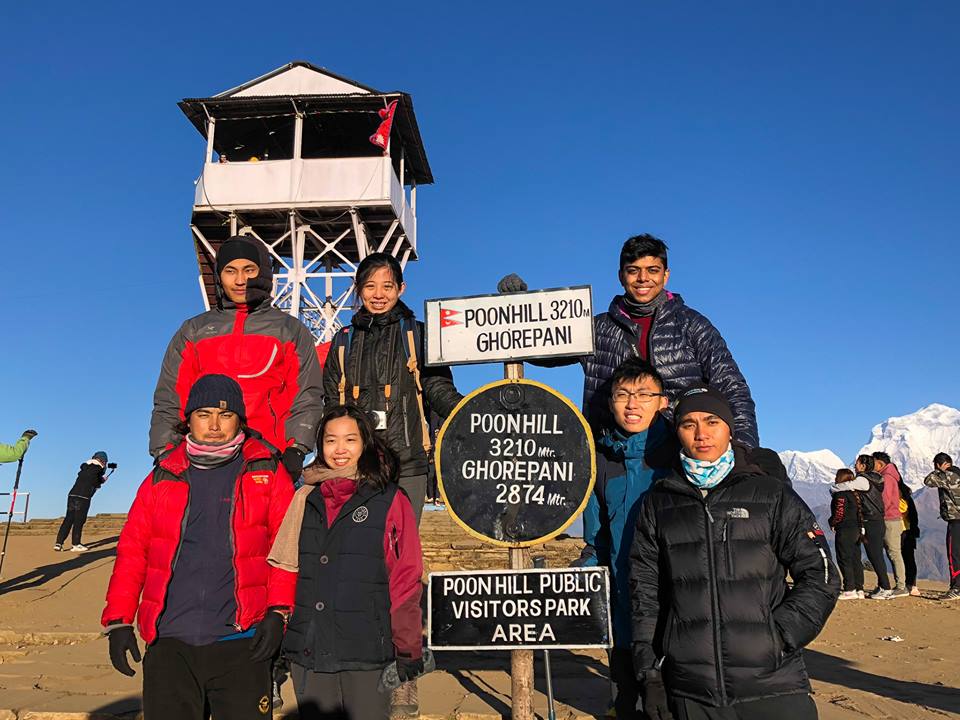
As the first rays of sunlight touch the horizon, the entire Annapurna and Dhaulagiri ranges begin to glow. It starts with a faint golden line, then suddenly the snow-capped peaks burst into shades of orange, pink, and fiery gold. Annapurna South, Machhapuchhre (Fishtail), Dhaulagiri, Nilgiri — they stand tall like giants painted by nature itself.
At 3,210 meters, Poon Hill offers one of the widest panoramic mountain views in Nepal. Unlike many high-altitude viewpoints, it’s relatively accessible, which makes it a favorite among trekkers and photographers alike. You don’t need to be an extreme climber to witness something extraordinary.
Why is Poon Hill so famous?
-
360-degree Himalayan panorama
-
Best sunrise photography spot in the Annapurna region
-
Clear views during the spring and autumn seasons
-
Easily accessible from Ghorepani
This is not just a viewpoint; it’s an emotional experience. Many trekkers say the sunrise at Poon Hill is worth the entire journey alone. And the best part? It’s just the beginning of your 15-day adventure toward Annapurna Base Camp.
Best Time to Do the Annapurna Base Camp Trek
Timing matters in the Himalayas. Choosing the right season can dramatically enhance your trekking experience. The Annapurna Base Camp Trek – 15 Days via Poon Hill is possible year-round, but certain seasons offer ideal conditions.
Spring (March to May)
Spring is one of the best times for the trek. The weather is stable, temperatures are moderate, and the rhododendron forests are in full bloom. Imagine walking through hills covered in red and pink blossoms with snow-capped mountains in the background. It’s like nature showing off.
Advantages of Spring:
Autumn (September to November)
Autumn is the peak trekking season in Nepal. After the monsoon washes away dust and pollution, the skies become crystal clear. Visibility is often at its best during this time.
Advantages of Autumn:
What About Winter and Monsoon?
Winter (December–February) is colder but quieter. Monsoon (June–August) brings rain and slippery trails but lush greenery.
For the best overall experience, spring and autumn are highly recommended.
Difficulty Level and Physical Preparation
One of the most common questions is: “How difficult is the Annapurna Base Camp Trek?”
The honest answer? It’s moderately challenging — but absolutely achievable with proper preparation.
This 15-day itinerary is designed with gradual altitude gain, making it suitable for:
You’ll walk about 5–7 hours daily on varied terrain: stone steps, forest trails, suspension bridges, and alpine paths. Some sections, like the Ulleri stone staircase, can test your endurance. But remember, it’s not a race.
How to prepare?
-
Start cardio training 6–8 weeks before
-
Practice hiking with a backpack
-
Strengthen legs with squats and lunges
-
Improve stamina with long walks
Altitude sickness is a real concern above 3,000 meters. However, the gradual ascent through Poon Hill significantly reduces risks. Churen Himal Treks ensures proper acclimatization and safety monitoring throughout the journey.
If you can comfortably hike for several hours and maintain a positive mindset, you can do this trek.
Food, Accommodation & Facilities During the Trek
Trekking in Nepal doesn’t mean sacrificing comfort. Along the Annapurna Base Camp route, you’ll stay in traditional tea houses — simple yet cozy mountain lodges run by local families.
Accommodation
Rooms are typically twin-sharing with basic beds, blankets, and pillows. While luxury isn’t the focus, warmth and hospitality are guaranteed.
Facilities may include:
-
Shared bathrooms
-
Hot showers (extra cost in higher altitudes)
-
Charging stations (solar-powered in some areas)
-
WiFi (limited at higher elevations)
Food
The food menu is surprisingly diverse. Popular options include:
-
Dal Bhat (rice, lentils, vegetables)
-
Noodles and pasta
-
Fried rice
-
Pancakes and porridge
-
Tea, coffee, and hot chocolate
Dal Bhat is the ultimate trekking fuel — nutritious, filling, and refillable in many tea houses. You’ll quickly learn why locals say, “Dal Bhat power, 24 hour!”
As you go higher, food prices increase due to transportation costs. However, Churen Himal Treks ensures hygienic and reliable accommodations throughout the trek.
Permits Required for Annapurna Base Camp Trek
To trek in the Annapurna region, you need two essential permits:
-
Annapurna Conservation Area Permit (ACAP)
-
Trekkers’ Information Management System (TIMS) Card
These permits help regulate tourism and support conservation efforts. The Annapurna Conservation Area protects wildlife, forests, and local communities.
Churen Himal Treks and Expedition Pvt. Ltd. handles all permit arrangements for you, saving time and hassle. Everything is organized before you begin the trek.
Why Book with Churen Himal Treks and Expedition Pvt. Ltd.?
There are hundreds of trekking agencies in Nepal. So why choose Churen Himal?
Because experience matters.
When you book with a local agency, you support the Nepalese economy and local communities. It’s responsible tourism in action.
Explore more packages here:














Joëlle Garo-Dezanniaux de France écrit sur 16-12-2020
Agence très sérieuse, professionnelle toujours à l’écoute de nos attentes et de nos envies.Capable de nous proposer des treks à la demande et personnalisés.Cela fait maintenant la 13ème année que nous partons avec Churen Himal Treks.
Sabrine de England écrit sur 16-01-2019
I went for an Everest Base Camp trek with CHT team in May 2018. Being a very organised person (I prefer everything to be planned in detail and booked in advance before I travel), I was a bit sceptic and nervous about the kind of arrangements that CHT would have done. But when I got there, I was pleased and surprised to see the amount of planning that CHT team had done and the professionalism that they showed at every step of our journey. We had two tour guides (Ranbir and Mulal) supported by two porters (Pasang and Dhane) all of them were very helpful, professional and were very accommodating of all our needs. I highly recommend Churen Himal Treks for your hiking needs.